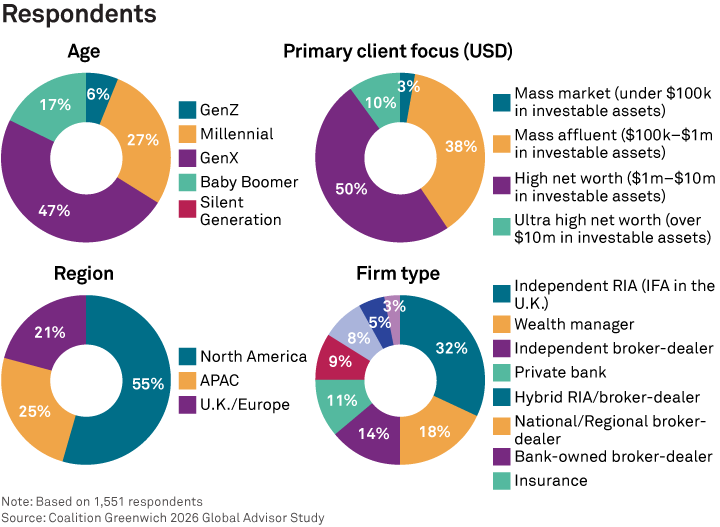
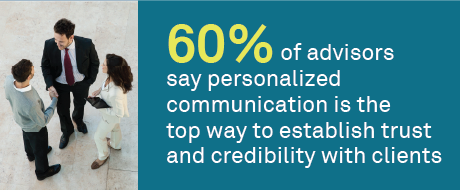
According to our recent research, which gathered insights from over 1,500 financial advisors, while digital connections matter for the advisor-client relationship, a personalized touch is necessary. In fact, 60% of advisors say personalized communication is the top way to establish trust and credibility with clients. Referrals remain a top driver of new client relationships, and despite the growth in digital channels, inperson meetings and calls are the best ways to maintain and grow these relationships.
At the same time, advisors are increasingly using technology to manage their businesses and interact with clients, with 62% of advisors reporting that they or their firms now incorporate artificial intelligence (AI) into their investment process. We also continue to observe the importance of social media in advisor-client relationships. Over 60% of advisors follow their clients on social media, with a strong correlation between age of the financial advisor and their social media usage (i.e., more Gen Z than Baby Boomers).
However, some advisors, including in those in the United States, continue to report concerns about regulatory and compliance issues related to social media use, while others believe that they are not yet using social media to its full potential. By understanding these advisor preferences, we believe asset managers can develop more effective engagement strategies and build stronger advisor relationships.
Moreover, advisors will still rely on these tools to deepen relationships with end clients.
Asset managers must continue to adapt their approach to engaging with financial advisors to build strong, lasting relationships and deliver results for the advisor’s clients. Engagement is critical to success, with over 80% of global advisors regularly interacting with representatives of asset management firms, and nearly 60% of advisors interacting on at least a monthly basis.
Moreover, while digital channels such as email and phone/video remain popular engagement methods for advisors, in-person meetings with asset manager representatives continue to be used to stay on top of the latest products and services, suggesting that a personalized touch between advisors and wholesalers remains necessary. The product mix also matters, with 46% of the advisor’s clients requesting specific investment funds for their portfolios. However, the brand of the asset manager is the critical factor for end-client receptivity to advisor recommendations.
As advisors continue to evolve their businesses, asset managers must meet them where they are across multiple channels, including in-person, online and through social media. However, advisors also report that they are not fully satisfied with the level of asset manager engagement, with investment selection less reliant on the asset management representative than it was over five years ago. Instead, third-party research tools and internal research methods have risen in influence, suggesting greater scrutiny and independence by advisors when selecting investments. And while performance and product fit into asset allocations matter most in investment selection, delivering these results with low fees is also key to success.
MethodologyDuring Q1 2026, Crisil Coalition Greenwich conducted 1,551 in-depth interviews with advisors in 10 different countries across North America, the United Kingdom/Europe, and Asia-Pacific (APAC). The study focused on the advisor business and advisor-asset manager relationships across a diverse range of advisor cohorts and experience levels, client focus (by wealth), and types of firms. This report was produced for LinkedIn by Crisil Coalition Greenwich.