As spending continues to rise, buy-side use of alternative data is becoming increasingly widespread. A whopping 75% have incorporated alt data into the research and investment process, and 46% are using it in portfolio construction, according to our recent study. These high adoption rates have led to rising spending industry-wide, with 63% of investors planning to increase their outlays, further driven by the transformative power of generative AI.
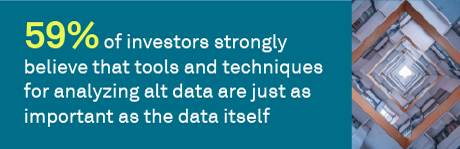
Artificial intelligence (AI) simply makes alt data easier to use and powers up these datasets when combined with private and public markets data. However, it’s about more than just the data, as investors believe that tools and techniques to analyze alt data are as important as the data itself.
We believe that the success of alt data providers requires even more. They must not only provide unique data (e.g., private credit, Web 3.0) and tools to analyze it, but also expand their datasets, provide in-depth support and integrate their offerings into client ecosystems, enabling clients to find the return on investment (ROI) they need.
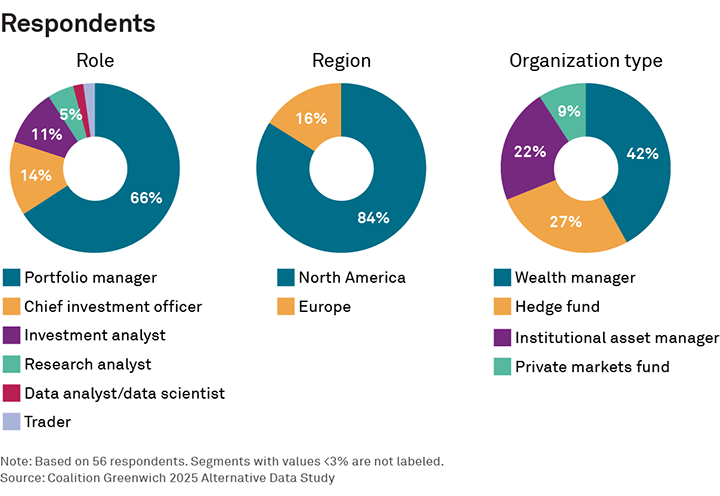
MethodologyThis study is an update to our series of studies designed to better understand the trends and challenges of alternative data use by the buy side, alongside the role of providers in the United States, United Kingdom and Europe. This particular report is the second in a series and is directed more at the data providers, rather than the end users.
Between September and October 2025, Crisil Coalition Greenwich gathered responses from 56 buy-side firms, including wealth managers, hedge funds, institutional asset managers, and private markets funds. The majority of insights stem from roles including portfolio manager, chief investment officer, investment analyst, and research analyst. The study also covers a range of investment strategies across equities predominately (with some fixed income), reflecting a combination of fundamental equity, quantamental, quantitative, and fixed-income strategies.