With logistics bottlenecks disrupting the performance of companies around the world, institutional investors are seeking new sources of alternative data on supply chains to help inform future investment decisions.
The stablecoin industry is racing to attract institutional backing and achieve greater regulatory clarity by improving disclosure policies and adopting high-quality reserves.
The share of U.S. retail investors ranking their financial advisors’ presence on social media as an important component to their relationship grew to almost 40% in 2021 from just 12% in in 2016.
Buy-side and sell-side market participants are eyeing derivative and synthetic instruments as a potential on-ramp for institutional participation in the crypto currency markets.
U.S. Commercial banks have an opportunity to strengthen client relationships by providing advice and support to small businesses and middle-market companies concerned about inflation, supply-chain disruptions and other threats to the economy.
In a year of surging capital market inflows and soaring equity market valuations, the biggest challenge for many asset managers was getting their funds to stand out in a crowded field of attractive products on retail distribution platforms.
Demand for new sources of data among institutional investors is driving double-digit growth in annual budgets for “alternative data” and putting new emphasis on internal data management capabilities.
Faced with increasingly fast and complex markets and constrained by budget limitations, asset owners are asking their asset managers for insights, advice and enhanced levels of service.
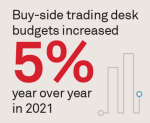
The surge in trading activity triggered by the crisis last year fueled an increase in buy-side spending that reversed a decade-long decline on payments for trade execution and research.