Algorithmic trading strategies are taking hold in FX — a development that is providing a boost to proprietary bank trading systems that had been losing market share to multi-dealer trading platforms.
Private and retail banks in Asia receive lower quality service from investment fund providers than their counterparts in Europe and North America, and service standards in Asia could slip further as several large asset management firms scale back resource commitments to the channel.
Almost three quarters of global foreign exchange trading volumes (74%) were executed through electronic systems last year, up from 71% in 2012, according to a new report, As e-FX Market Matures, Incremental Growth Driven By Smaller Institutions, from Greenwich Associates that analyzes trends in non-interbank, client-generated FX trading volumes.
A strong recovery in asset valuations and improvements in pension plan funding levels have not slowed the rapid pace of change in institutional investment portfolios.
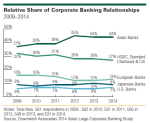
Intense competition among banks for trade finance business in Asia provides companies with opportunities to benefit from lower pricing for these important products and services.
Deutsche Bank, UBS, Citi, and Barclays are tightening their grip on the foreign exchange market as global FX continues its transition to a primarily electronic marketplace, according to a new report from Greenwich Associates.
Fixed-income exchange-traded funds (ETFs) are poised to take on a bigger role in institutional portfolios, according to a new report, Institutional Investors Turning to Fixed-Income ETFs in Evolving Bond Market, from Greenwich Associates.
Greenwich Associates today named Standard Life, Fidelity and Zurich as the 2014 Greenwich Quality Leaders in U.K. Bundled Defined Contribution Corporate Pension Services.